UmiCS
Robotic Cardiac Surgery
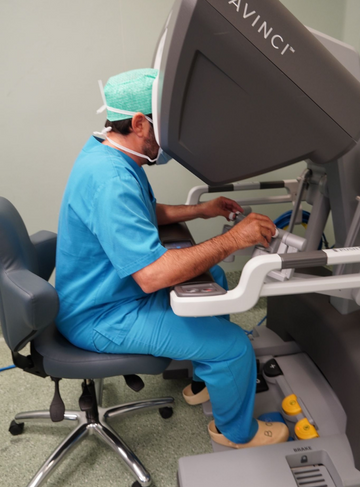
Robotic Cardiac Surgery is a minimally invasive technique that uses a surgical robot controlled by a surgeon to perform complex cardiac procedures.
Book an Appointment
For any clarification, you can contact our Customer Service at 911 501 808.

WHAT IS CATHETERIZATION, ANGIOPLASTY AND STENTS
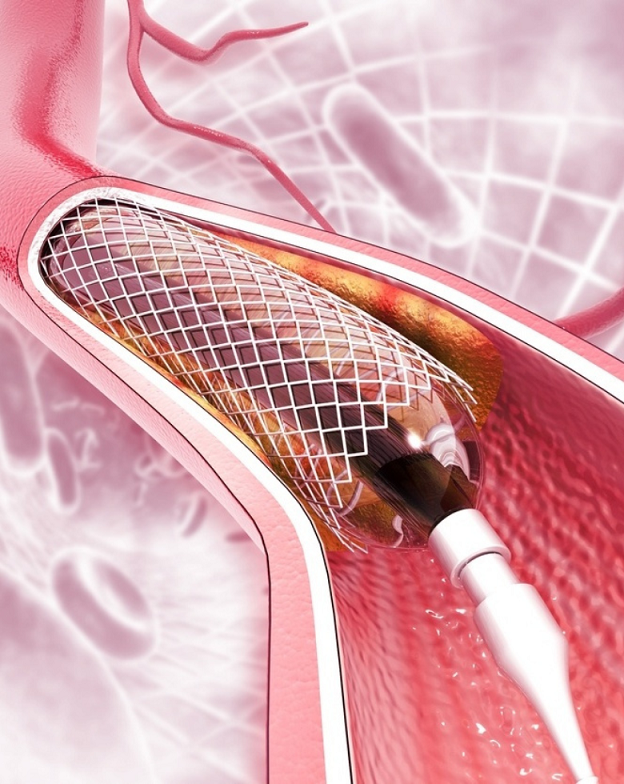
Cardiac catheterization is a test carried out in hemodynamics centers using minimally invasive techniques and medical equipment capable of generating precise images of the heart structure. Catheterization is essential for identifying the presence, location and size of obstructions in the coronary arteries. Coronary angioplasty is the procedure by which blood flow is restored to the coronary arteries and can be performed using a balloon catheter or by placing stents.
Description of the procedure
The doctor will perform a series of tests to determine if there are any signs of coronary ischemia. If the answer is positive, the patient will undergo cardiac catheterization.
How is cardiac catheterization performed?
This is the groin through which a thin catheter is introduced into the heart. Through this examination it is possible to check for ischemia, assess its size and the degree of obstruction it causes. In the same procedure, the heart muscle, valves and aorta are assessed, as well as angiographies when necessary.
Mild obstructions are treated with medication and dietary changes to lower cholesterol. Obstructions that compromise 70% of the blood flow at a certain point or points in the coronary arteries are considered major, while those that block more than 80% of the blood flow are considered severe.
Angioplasty
The patient will then undergo Coronary Angioplasty, where the interventional cardiologist will use the same technique as cardiac catheterization, but may use a small balloon to dilate a blocked artery or provide a small prosthesis to expand the walls of the coronary artery. This prosthesis is called a stent, which can be metal or polymer (bioabsorbable stent), whether or not it is wrapped in medication (drug-eluting stent).
Angioplasty is a well-established procedure that is widely used to save patients suffering from acute myocardial infarction. It is also an option to revascularization surgeries where the size of the incisions varies between 15 and 30 centimetres and the post-operative period requires special care.
It doesn't require much care, the risk of infection is low and patients recover more quickly.
The duration of catheterization, angioplasty and stenting surgery is usually 30 to 60 minutes. Patients are discharged after 0 - 1 days.
Patients can return to work after 3 days. Full mobility is usually restored after 3 days and moderate physical activity after 1 week.
Duration
> 30-60 min
Anesthesia
> Local
Hospitalization
> 0-1 days
Medical leave
> 3 days
Recovery
> 3 days
Inhibition of physical activity
> 1 week
Learn more
about this
procedure
Make an appointment to clarify any doubts or call us through our contacts