UmiCS
Robotic Cardiac Surgery
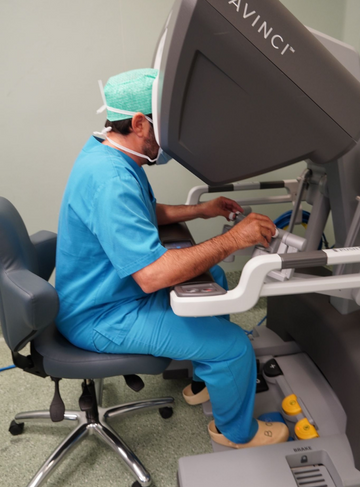
Robotic Cardiac Surgery is a minimally invasive technique that uses a surgical robot controlled by a surgeon to perform complex cardiac procedures.

Book an Appointment
For any clarification, you can contact our Customer Service at 911 501 808.


What is the aortic valve?
The aortic valve is located between the left ventricle and the aorta. During the heartbeat, it opens to distribute the blood, which is pumped through the aorta to our entire body. When it relaxes, it closes to prevent backflow into the ventricle. At the top of the valve are three leaf-shaped cusps, which are responsible for the opening and closing movements.
Causes of aortic valve pathology?
Most valvular heart diseases are caused by the stiffening or calcification of the cusps. Over the years, calcium crystals found in the body are deposited in the muscular wall, causing stiffness.
Aortic stenosis occurs when the cusps become more rigid, preventing them from opening fully for blood flow. With a smaller opening, the heart has to work harder to keep pumping. Aortic regurgitation occurs when the cusps don't close completely, allowing backflow into the ventricle.
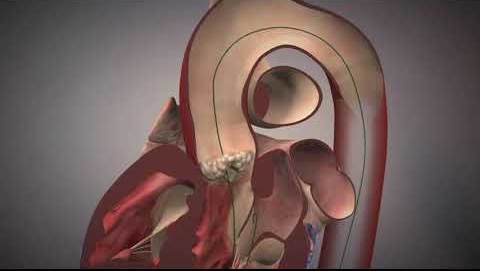

To compensate for the decrease in blood supply that occurs with stenosis and regurgitation, the heart has to work harder. This extra effort makes the muscle in the ventricular wall stiffer and requires more blood from the coronary arteries. When the blood supply is not sufficient for the heart to function properly, heart failure occurs.
Symptoms of aortic valve pathology:
Chest pain (angina).
Fainting.
Palpitations.
Shortness of breath, dizziness, and fatigue.
Swollen ankles due to fluid retention.
Procedures
TAVI
TAVI or Transcatheter Aortic Valve Implantation is a valve replacement technique for the treatment of Aortic Stenosis in patients who have contraindications or are at high risk for conventional surgery.
Aortic Valve Replacement
Mini sternotomy is a minimally invasive surgical procedure through a small incision to treat aortic stenosis, which consists of a malfunctioning aortic valve that requires replacement.