UmiCS
Robotic Cardiac Surgery
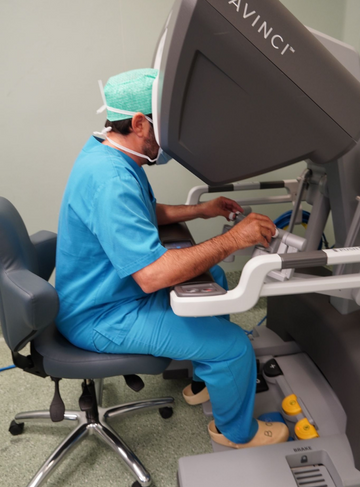
Robotic Cardiac Surgery is a minimally invasive technique that uses a surgical robot controlled by a surgeon to perform complex cardiac procedures.
Book an Appointment
For any clarification, you can contact our Customer Service at 911 501 808.


WHAT IS TAVI
TAVI or Transcatheter Aortic Valve Implantation is a valve replacement technique for the treatment of Aortic Stenosis in patients who have contraindications or are at high risk for conventional surgery.
Description of the procedure
The treatment indicated for aortic valve pathologies such as Aortic Stenosis and Aortic Regurgitation is open-chest surgery, where the old valve will be replaced by a new one. Sometimes, however, the patient's condition deteriorates rapidly and they are very frail or have other conditions that make the surgical risk extremely high. For these cases, Transcatheter Aortic Valve Implantation or TAVI is indicated.
All cases are discussed in a Heart Team meeting in which interventional cardiologists and cardiac surgeons evaluate each patient to decide on the best approach for them and the least invasive way to achieve the fastest recovery.
How is a TAVI performed?
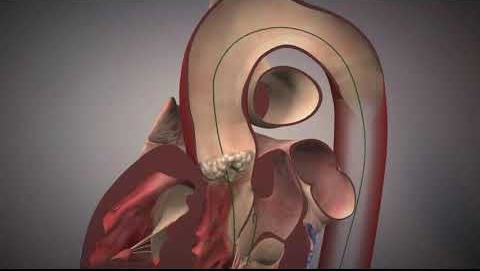

During TAVI, a catheter is inserted through a small puncture in the femoral artery in the groin. At the tip of the catheter is a small balloon which is guided to the heart.
When it reaches its destination, it is inflated at the bottom, creating space for the replacement. Once the balloon is in place, the doctor uses an imaging device to visualize the aortic valve and ensure that the new implant is correctly placed. Next, a biological valve with a stent is placed in another catheter and is positioned over the old one. After overlapping, the new valve will start working immediately, which will allow the opening and closing movements to be carried out completely. The catheter is then removed and the puncture is closed with a stitch or a vascular closure device.
On average, the TAVI procedure takes around 100 minutes to complete and patients are generally able to recover more quickly compared to traditional aortic valve replacement surgery.
TAVI is a very important option for patients with aortic stenosis who are not candidates for open surgery due to the high risk associated with health problems or advanced age. It is a safe and effective procedure that can significantly improve the patient's quality of life and should be discussed with your specialist doctor.
The patient has a rapid hemodynamic gain and complications are rare. Due to the small size of the cuts, the time the patient remains bedridden is relatively short, avoiding complications.
The duration of TAVI surgery is usually 100 minutes. Patients are discharged after 1-2 days.
As far as work activity is concerned, after 1 week the patient can return to work. Normally, full mobility is restored after 1 week and moderate physical activity after 2 weeks.
Duration
> 150 min
Anesthesia
> sedation
Hospitalization
> 1-2 days
Medical leave
> 1 week
Recovery
> 1 week
Inhibition of physical activity
> 2 week
Learn more
about this
procedure
Make an appointment to clarify any doubts or call us through our contacts