UmiCS
Robotic Cardiac Surgery
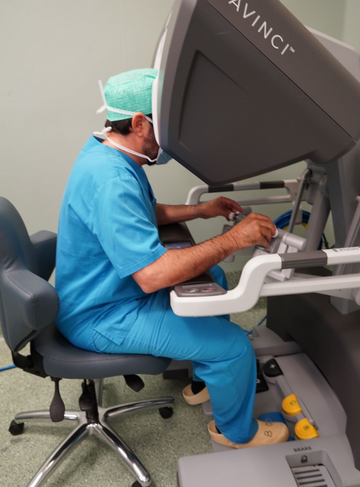
Robotic Cardiac Surgery is a minimally invasive technique that uses a surgical robot controlled by a surgeon to perform complex cardiac procedures.
Book an Appointment
For any clarification, you can contact our Customer Service at 911 501 808.

WHAT IS ROBOTIC MITRAL VALVE SURGERY
Mitral robotic surgery for mitral valve repair with less invasion through smaller incisions and faster recovery.

Description of the procedure
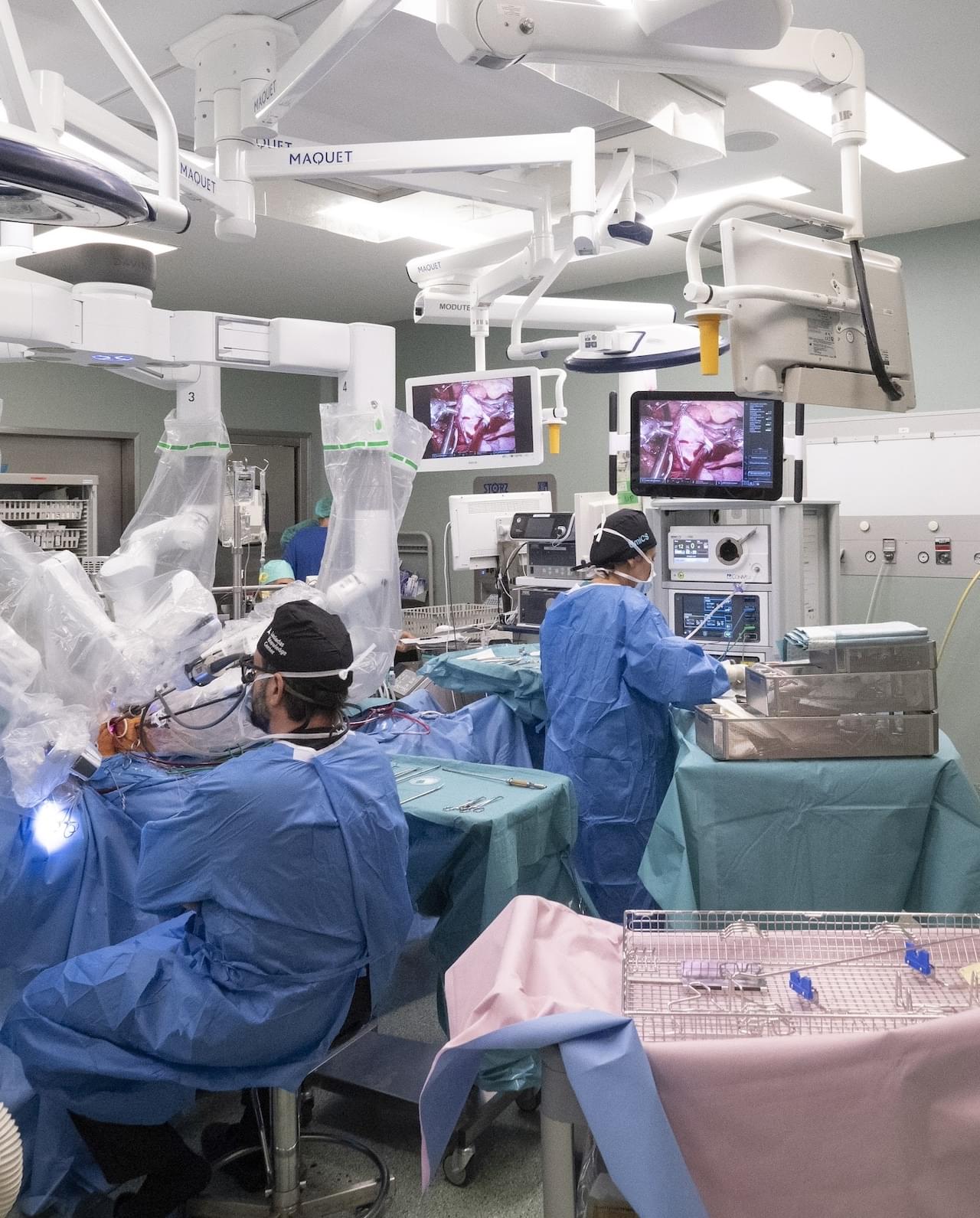
Robotic mitral valve surgery consists of robot-assisted mitral valve repair surgery, where two certified heart surgeons use robotic equipment to perform exactly the same procedure as traditional open-chest heart surgery, without the need to make a large incision in the breastbone.
Surgeons perform the procedure through small incisions in the right chest, using finger-sized instruments that are inserted between the ribs. In this procedure, a surgeon sits at a console and views the heart using a magnified high-definition 3D view on a video monitor. On the operating table, another surgeon works alongside the surgeon at the console to perform the procedure and ensure that it is conducted safely and efficiently. This surgeon can closely examine the mitral valve problem using the high-definition 3D video monitor. This allows them to have a clearer and more realistic perspective of the heart compared to open heart surgery, in which surgeons see the heart from a greater distance.
The patient will need to be supported by a heart-lung bypass machine during the procedure, which will allow the heart to stop form and insert instruments into the internal chambers to repair the mitral valve. The robotic arms are used to duplicate specific maneuvers used in open chest surgery.
To repair the mitral valve, an incision is made in the left upper chamber or left atrium of the heart to gain access to the mitral valve. The surgeon can then identify the problem with the mitral valve and repair it. In mitral valve prolapse, the mitral valve, located between the left atrium of the heart and the left lower chamber or left ventricle, does not close properly. The valve leaflets protrude or prolapse upwards or backwards into the left atrium as the heart contracts. This leads to blood leaking backwards into the left atrium, a condition called mitral valve regurgitation. To repair this condition, various technical procedures are carried out. Sometimes a small part of the leaflet, the part of the valve that doesn't close properly, is identified and a triangular section is removed. The surgeon then sews the cut edges of the leaflet together to repair the valve.
In other cases, new chords or strings are inserted to support the broken leaflet. An annuloplasty band is then placed around the circumference of the valve to stabilize the repair. The surgeon will close the incisions in your chest after the procedure. In robot-assisted heart surgery, most people have a faster recovery, smaller incisions and less pain than after open-chest surgery.
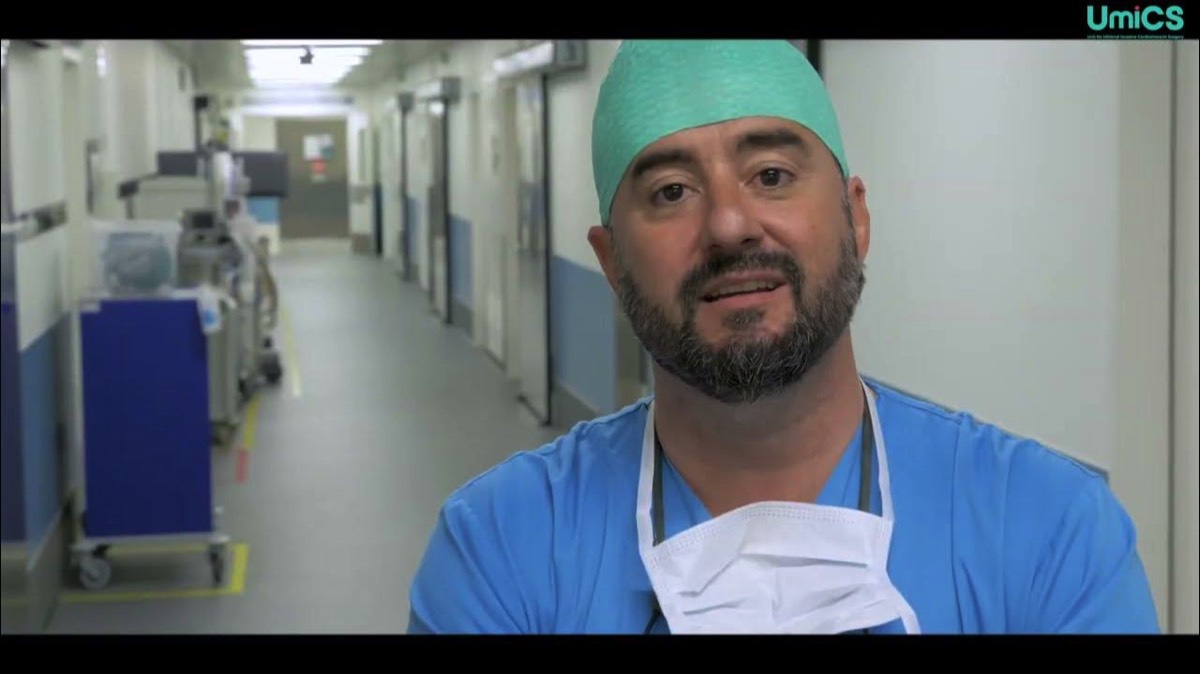
Dr. Javier Gallego and the UMICS team were pioneers in performing robotic mitral valve surgery in Portugal at Hospital Lusíadas Lisboa with the adaptation of the DaVinci robot for this surgery, being one of the few international teams to perform it. Alongside his surgical activity, Dr. Javier Gallego is also responsible for coordinating international training for other surgeons through the UMICS Academy's international courses to ensure that more and more patients have access to better care through less invasive procedures and faster recoveries, because Less is more.
The duration of a mitraclip operation is usually 120 minutes. Patients are discharged after 1-2 days.
As far as work activity is concerned, after 1 week the patient can return to work. Normally, full mobility is restored after 1 week and moderate physical activity after 2 weeks.
Duration
> 120 min
Anesthesia
> general
Hospitalization
> 1-2 days
Medical leave
> 1 week
Recovery
> 1 week
Inhibition of physical activity
> 2 weeks
Learn more
about this
procedure
Make an appointment to clarify any doubts or call us through our contacts