UmiCS
Robotic Cardiac Surgery
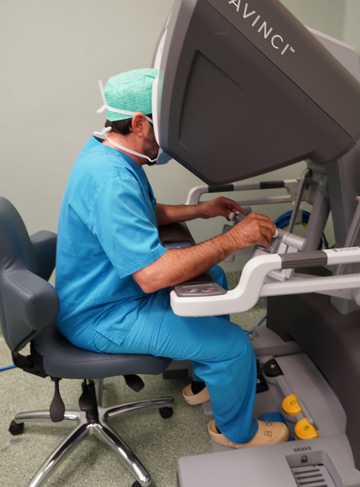
Robotic Cardiac Surgery is a minimally invasive technique that uses a surgical robot controlled by a surgeon to perform complex cardiac procedures.
Book an Appointment
For any clarification, you can contact our Customer Service at 911 501 808.

Pectus Excavatum - What it is, causes, symptoms, diagnosis and treatments
What is Pectus Excavatum?
Pectus Excavatum is a deformity of the chest caused by abnormal growth of the sternum and rib bones, resulting in a depression in the center of the chest. This condition can be detected soon after birth, but tends to worsen during the growth phase.
Causes of Pectus Excavatum
It is caused by a combination of genetic factors and abnormal development of the sternum, the long bone in the middle of the chest. Although it can occur at any age, it is more common in adolescents during the growth period.
Symptoms
In general, this condition causes no physical symptoms. However, some people may experience fatigue or pain in the chest, especially during intense physical activity. In addition, the deformity can affect breathing and lung capacity, especially in severe cases.
Deep depression can compress organs such as the lungs and/or heart, leading to cardiac and respiratory problems. When the deformity is severe, there can be additional complications, including shortness of breath, poor resistance to physical activity, tiredness, palpitations and dizziness.
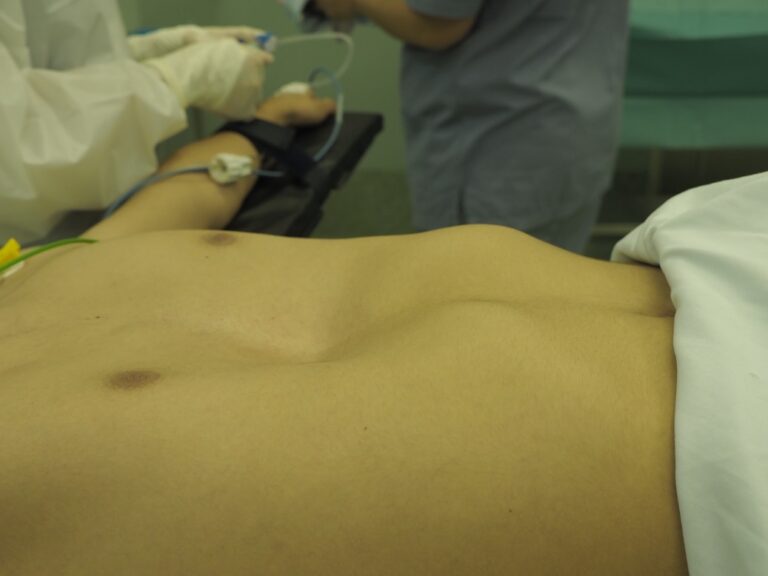
In addition to physical problems, sufferers of Pectus Excavatum can also face psychological problems related to appearance and self-esteem, especially during puberty. Concern about appearance and self-esteem can negatively affect a person's social and emotional life.
Diagnosis of Pectus Excavatum
When the patient comes for a consultation at UMICS, the thoracic surgeon (a specialist in chest wall deformities) carries out a 3D study of the chest wall to assess the degree of the deformity using a computer without any radiation for the patient. This study then makes it possible to order a non-surgical treatment system to treat pectus excavatum (Vacuum Bell).
The doctor can measure the depth of the deformity and assess whether there is an impact on breathing or the heart. Parents usually seek treatment for their children when they reach adolescence.
Pectus Excavatum treatments
There are different treatment possibilities. It is important to treat Pectus Excavatum as early as possible, as this can prevent serious complications and improve the quality of life of the person affected. Surgery is one of the most effective treatment options, but it is important that it is performed by a qualified specialist, namely a cardiothoracic surgeon.
Surgical treatment is indicated for patients with severe deformities and associated symptoms.
Nuss endoscopic surgery
Technological developments have allowed the endoscopic technique used to treat pectus excavatum to become less invasive - Nuss surgery.
Surgery with suprasternal silicone prosthesis
It is one of the minimally invasive solutions for the treatment of Pectus Excavatum and Poland's Syndrome.
Non-invasive treatment with Vacuum Bell
In younger patients, Pectus excavatum can be treated with a suction cup device, Vacuum Bell.
Psychological support
In addition to physical treatments, it is important to remember that psychological treatment is also an important option for patients with Pectus Excavatum. Physical appearance can be a source of anxiety and low self-esteem, especially during adolescence.
For this reason, psychological therapy can be extremely useful, alongside treatment, to help deal with these problems and improve patients' quality of life.
Therapy can include individual sessions with a therapist or support groups, where patients can share their experiences and learn strategies for dealing with their feelings.
In conclusion, Pectus Excavatum is a deformity of the chest wall that can cause heart and respiratory problems, as well as psychological problems. It is important that parents are aware of the signs and symptoms and seek treatment for their children as early as possible.
Procedures
Non-invasive treatment with Vacuum Bell
In younger patients, Pectus excavatum can be treated with a suction cup device, Vacuum Bell.
3D chest wall study
When the patient comes to see the thoracic surgeon (a specialist in chest wall deformities), a 3D scan of the chest wall is carried out to assess the degree of the deformity.
Surgery with suprasternal silicone prosthesis
It is one of the minimally invasive solutions for the treatment of Pectus Excavatum and Poland's Syndrome.
Nuss endoscopic surgery
Technological developments have allowed the endoscopic technique used to treat pectus excavatum to become less invasive - Nuss surgery.